This blog is a (much!) less-than-formal outlining of recent travels, events, happenings, thoughts and comments which tend to have some occupational relevance, but are on occasion nothing more than a means of passing the time while waiting for trains, planes & automobiles...
Showing posts with label statistics. Show all posts

Tuesday, 13 October 2020

Tin Foil Hats Don't Protect Against Alien Abduction Either

I read in yesterday's Times about a Canadian study which claims to show that face masks can almost halve the number of new Covid-19 cases, but with the caveat that it has not yet been peer-reviewed. So, being more than mildly cynical about the efficiency of wearing non-medical face coverings to mitigate against the transmission of microscopic organisms, I've been and found it....

For the study, the authors looked at the difference in case growth rate between Ontario’s 34 Public Health Units (PHUs) and between Canada’s ten provinces during the period when some had mask mandates in force and some did not. They allowed two weeks for mandates to have an impact on reported cases, and did additional primary research to show that the mandates did in fact coincide with a change in reported behaviour (i.e. more people reported wearing masks).


The first point to be made is that the mask mandates came in during the general decline of the epidemic and the period of low prevalence in July and August when there were only around 400 cases per day nationally in Canada. This makes the data highly sensitive to the testing regime and susceptible to false positives. It is noteworthy that there was a substantial increase in testing in July, showing up as a bump in the otherwise declining cases curve. At the time Ontario was recording just 100 cases or so per day. Divided between the 34 PHUs, that’s just three each per day. At a time of very low prevalence and high levels of testing such data cannot be considered reliable.


From a big picture point of view, it is of significance that once masks were mandated everywhere in Ontario (from July 8th) and Quebec (from July 18th) by the end of August cases started climbing again and have continued to do so as autumn has drawn in. Additionally, if you look at the cases curve for each province the impact of increased testing is clear but there is no sign of any impact of masks (or other intervention), just a smooth curve. Neither of these points supports the hypothesis that masks make a difference.


The main graphs the authors present do show an average difference in case growth rate between mask mandate and non-mandate PHUs and provinces for the four weeks or so in July and early August when mask mandates were not universal. In line with the authors’ hypothesis, mask mandate PHUs and provinces had a lower overall growth rate, though this was not consistently the case. It is noteworthy that the time lag from the mandate dates to the divergence in case growth of mandate and non-mandate regions is very different on PHU level and province level – two weeks versus four weeks – again counting against a claim to causative effect.

The most obvious explanation for the divergence between the two categories (mandate and non-mandate) is that the different PHUs or provinces are on different trajectories and so when they move from one category to the other (non-mandate to mandate) this has a corresponding effect on the growth rates. There is strong evidence this is the case.


On the PHUs graph we see initially in the second week of July the few PHUs with mask mandates in place have a higher average growth rate than those without one – the opposite of the hypothesis. Then, as some of those without mandates impose mandates and switch categories in the following week, the mandate PHU average growth rate quickly declines while those remaining in the non-mandate category quickly begin to show a higher rate of growth. 

Finally, in the second week of August (when the study period comes to an end), most of the remaining PHUs impose mandates and switch categories, and the growth rate in the mandate PHUs spikes rapidly. The fact that this shift results in a spike rather than continued decline is indicative that any difference was an artefact of which PHUs happened to be in which category rather than the impact of masks. In other words, they brought their higher growth rate with them into the mandate category rather than seeing it curbed by their masks. In this regard it is significant that the remaining few PHUs with no mask mandate in the second week of August actually trend below those with mandates – again, the opposite of the hypothesis.

In the case of provinces, in addition to the problem mentioned above that the average difference takes four weeks to show up rather than two, the data is skewed by the fact that only two of the ten provinces adopt a mandate during the study period so the sample size is very small and, again, the effect could be merely a function of the different trajectories of the different provinces. As noted, there is no visible sign in the case curves of the mask mandates altering the trajectories, and most provinces have seen a large growth in cases during the autumn.

The paper includes an elaborate attempt to account for the impact of other government interventions, but as this is all modelling, based on a lot of estimates and guesses, it does not address the criticisms raised here.

The evidence that the general use of cloth masks by the general population is ineffective for preventing the spread of Covid-19 (and other similar viruses) is well established. This is why the World Health Organisation did not endorse them until June, and even then stated: ‘At the present time, the widespread use of masks by healthy people in the community setting is not yet supported by high quality or direct scientific evidence.’ . It listed 11 ‘likely disadvantages of the use of mask by healthy people in the general public’, including ‘potential increased risk of self-contamination’. It all but admitted to BBC medical correspondent Deborah Cohen on July 14th that the change of policy was due to political lobbying rather than evidence. Cohen said: 
    ‘We had been told by various sources WHO committee reviewing the evidence had not backed masks but they recommended them due to political lobbying. This point was put to WHO who did not deny.’ 

The study from Canada is the latest effort to produce evidence for something that has long been established to be false. Viruses are too small to be caught by pieces of cloth and the general public will never use masks properly or keep them clean. Airborne infection is largely a function of the viral load or concentration that has built up in a non-ventilated space, not the projection of droplets from cough and sneezes, and cloth masks are useless in preventing such a build-up of virus particles or protecting from the inhalation of them. They are also bad for health in multiple ways because they obstruct breathing clean air, are bad for social interaction, and particularly bad for social psychology. 

I've been told - repeatedly - that resistance to wearing masks (especially as they don't need to be medical grade and could in theory be fashioned out of old string vests)  indicates a susceptibility to conspiracy theories, possible David Icke related madness, selfishness or even a sign of low intelligence. However, when the evidence in favour of their use is either flimsy (no pun intended), or non-existent, they are not much more than the 2020 version of wearing tin foil hats to prevent abduction by aliens.

Thursday, 13 August 2020

Cherry Picked Information

Only 56 Million Cases to go until we reach H1N1 (Swine Flu) Cases from 2019!
Remind me again how long were schools shut down for?
What type of masks were popular back then?

Not having anything like as much data analysis to do as would be the case were we not in a pandemic, I've investigated the above meme which has appeared in my Facebook scroller due to posting by a Friend and getting liked/commented by enough other people to make it the first thing I saw.

The first thing that occurred to me was "is this data accurate"? I am not sure which data sources, location, or how recent it is, but as the poster has an intertest in US politics, it's probably about the US even though there are no citations to back up the statement.

However, it is consistent with the US CDC’s data. Over a period of one year (from April 12, 2009 to April 10, 2010), the CDC estimated there were 60.8 million cases of H1N1 in the United States [1]. Using the same source, the current cases of Covid-19 in the US are 4,920,369 (about 4.9 million) [2]. So as of today, we need roughly 55.9 million more Covid-19 cases (almost 56 million) to catch up on the 2009 H1N1 cases. So, yes, the data in the meme seems accurate.

Now, what about the argument? Although the conclusion is implied, the argument appears to be:
Premise 1: There were more 2009 H1N1 cases than the current pandemic
Premise 2: But we wear masks and close schools for this pandemic, but not for the 2009 pandemic.

Conclusion: we (or the US if my initial assumption is correct) are overreacting and don’t need to wear masks and close schools for this pandemic.

So on first reading, and without any sort or critical thought, it seems to make a sensible point, but a closer look shows it to be spurious. The argument rests on the hidden assumption that the case numbers are the primary determining factor for deciding if masks should be worn and schools should be closed.

But that doesn't make much sense as the average adult probably gets the common cold a few times a year, and given the US population, the cases of such a mild illness would be several hundred million a year. Clearly, other factors must be considered when deciding how to mitigate disease, whether that mitigation is with masks, closing schools, social distancing, or whatever else.

There are a number of important metrics in epidemiology such as incident rates, morbidity rates, mortality rates, hospitalisation rates, and many others, so only focusing on the cases is ridiculous, especially when these two diseases, H1N1 and Covid-19 are very different.

Going over each metric would be take way too long when there's cricket on the television, but we can clearly see that these two diseases are different by looking at the deaths in conjunction with the cases. The US coronavirus deaths to date attributed to COVID-19 is about 160,220 since January 2020, with an estimated 4.9 million cases.

However, H1N1 had substantially fewer (12,469 deaths from April 2009 to April 2010), from a whopping 60.8 million cases. But there is something else to think about. The death data for H1N1 is for one year, whereas the COVID-19 numbers are for only 8 months—and it may not slow down for several more months. Moreover, the H1N1 pandemic had relatively few precautions to attenuate its spread. Few people wore masks, there was little social distancing, etc.

So what does this mean? This means that over a period of 8 months, with social distancing, Covid-19 has more than 12 times the deaths (with social distancing and masks) from less than 1/12 the number of cases H1N1 had over one year. Though the 2009 pandemic was concerning, it was clearly nowhere near as deadly as this current pandemic. Therefore, at least concerning how society should react to the two diseases, it doesn’t make sense to compare these two diseases as equal.

So therefore this meme, which probably took seconds to compose, and maybe a couple of hours to pull apart with cited sources, makes a fallacious argument by using cherry-picked data from two very different diseases, and hyper focuses on case numbers as the sole metric for these decisions.

Who would have that sort thing would be all over T'Internet eh? :)


1. CDC website. 2009 H1N1 Pandemic (H1N1pdm09 virus). Last reviewed: June 11, 2019. Accessed Aug 12, 2020.

2. CDC website. Coronavirus Disease 2019 (COVID19). Cases, Data, and Surveillance. Last updated. Aug. 8, 2020, 07:00 PM. Accessed Aug 12, 2020.


Tuesday, 24 March 2020

Orwell's 1984: From Novel to Manifesto

I wasn't aware that Boris was going to make an announcement of any kind last night due to binge watching Bulletproof2 all day, so it was just a coincidence that I started watching ordinary TV just as "ordinary" life disappeared: The Prime Minister was addressing what until 8:30pm had been a free country and telling its population that we now live in a police state.

I, all my family and all my friends, have been placed under house arrest without even being accused of a crime - we're guilty of ??? Well what exactly ???? I went out yesterday and didn't see one single person stood closer than five feet to anybody else: in my locality social distancing was more than just observed, it was respected.

Boris said it was "for own my good". Really? Confined to the house, deprived of social contact, restricted diet, no exercise except walking once a day or going for a bike ride (that'd be nice - I live at the top of a very steep hill: Chris Hoy would have issues!), unable to replace anything unless it's on his list of essentials?

My analysis of currently available (publicly anyway) data suggests that Covid-19 might end up being responsible for around 2500 UK deaths, not the 250,000 or so which could possibly justify "solutions" which as Donald Trump has said may be worse than the problem.

I don't think it should be beyond the intellect of our government to realise that Northern Italy has some of the worst air pollution in Europe (at least until the last two weeks according to European Air Quality Index), so is it not likely that after decades of breathing it, the local elderly develop respiratory problems?

Nearly all Covid-19-related fatalities have "underlying health issues" (or so we're told), and thousands die globally infected with some type of coronavirus such as influenza, so we the people of the UK have now had our civil liberties removed in what may be just an attempt to prevent one particular coronavirus, (Covid-19), from replacing others as the bedfellow of those "underlying health issues"?

I can't find any worst-case predictions for Covid-19 causing a massive increase over and above the current coronavirus situation, and we haven't been told how many ‘corona-deaths’ were of people infected with Covid-19 but didn’t necessarily die of it, just what appears to be an assumption that without Covid-19 they'd still be alive.

When we have so many unknowns, and so little reliable data, how can last night's announcement be justified? What will be the results of shutting down the economy? It's very likely that unemployment will rise dramatically, and crime will rise along with it. Mental Health issues will increase, families with dysfunctional or dangerous relationships will begin to collapse, and the elderly all this is supposed to be protecting get a worse quality of life due to isolation, so may end up with reduced life expectancy anyway.

An economic depression will definitely result in poverty, pain and death which may vastly outweigh the current pandemic crisis, and that may just re-set and re-start when our brave new world has its draconian restrictions lifted.

And what if they're not?
What if our government decides that going back to how we were just a few days ago isn't safe for other reasons? Civil unrest due to the inevitable shortages of whatever goods, services and products we've come to expect or rely on? Climate change? Maybe they'll just get to like the privilege, power and authority?

I'm sat here blogging instead of doing anything more productive, or simply playing golf in the sunshine, because isolation is "for my own good", and that's precisely what many of the vulnerable students I used to teach told me was something their abusive parents said to them as a justification for their cruelty or neglect.

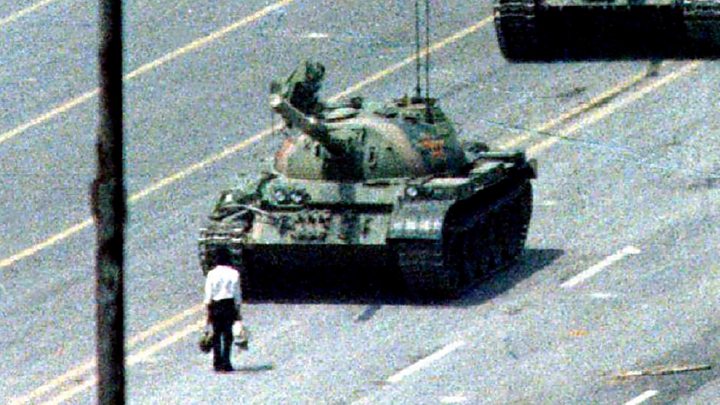
None of this feels as if it's for my benefit, and that's without me thinking that the pandemic effects haven't been modelled on statistically robust data (unless of course Boris is privvy to information we've not been given), so on balance I'm already leading towards contracting Covid-19 and seeing what happens as a preference to eventually standing in front of an army tank because I want to see my daughter and seeing if that really is safer.

Thursday, 19 March 2020

The Way I See It

The media (and the UK government earlier today) is calling Covid-19 a once-in-a-century pandemic, but it might also be a once-in-a-century series of interconnected chaotic global responses to a problem that hasn't been adequately defined.

Many countries have introduced draconian measures in an attempt to counteract the disease, but as far as I can tell, there just isn't enough reliable evidence as to the numbers infected, or continuing to become infected, for governments and modellers to make such monumental decisions or to monitor their impact.

If the pandemic dissipates, whether that's on its own or as a result of social distancing and lock-downs, the impact of it may allow the world to return to something like "normal", whatever that will mean for the next decade or so. However, if the pandemic continues to spread around the world, how will those making the decisions be able to ascertain whether they've made a positive or negative impact when the consequences of long-term lockdowns are unknown and vaccines or affordable treatments take years to develop and test properly.

The data collected so far (or at least the information I've been able to find), on the number of people infected and how the epidemic is evolving don't appear to be particularly reliable statistically speaking as it's probably safe to assume that some deaths and the vast majority of Covid-19 infections are being missed due to the limits on testing. Therefore, it's impossible to state with any degree of confidence if we are failing to capture instances of coronavirus by a factor of three or 300 as few countries, if any, can test a large number of people and so don't know how prevalent the virus is in a random sample of the general population.

This creates a tremendous amount of uncertainty about the risk of dying from Covid-19 as the reported fatality rates (according to the World Health Organisation it's 3.4%) don't just create fear and panic, they're completely meaningless. As far as I can tell, those who have been tested for Covid-19 are disproportionately patients of some description with severe symptoms and bad outcomes, and since few health systems have unlimited testing capacity, this sample selection bias will only get worse.

There has been only one instance of testing an entire, closed population, that of the passengers and crew of the Diamond Princess cruise ship where the case fatality rate was 1.0%, but it needs to be noted that this was a predominantly elderly demographic for whom  the Covid-19 death rate is thought to be higher than the general population.

Taking the Diamond Princess mortality rate and applying it across the age structure of the UK, our death rate of people from (or possibly with) coronavirus would be 0.125%. However, we need to caveat that as this calculation uses what I consider to be extremely thin base data (7 deaths from 712 out of almost 4000 on board) the true death rate could be one fifth of that (0.025%), or five times higher (0.625%).

We also need to consider the possibility that some of those infected may die later, and that cruise ship tourists may not be truly representative of the rest of the developed world (i.e. their lifestyle, on or off ship, may mean they have different frequencies of chronic diseases) so if we say double those base estimates we get a varying case fatality ratio somewhere between 0.05% and 1.25% across a country like ours.

That difference indicates the risk of what is being done as a population-wide fatality rate of 0.05% is lower than seasonal influenza, which if it is the true proportion, the world's global lock-down and its likely social and financial consequences is not at all rational.

Now of course the Covid-19 case fatality rate isn't likely to be that low, and there are many common-cold-type viruses that have case fatality rates up to 10% when they infect the elderly, particularly if they're residents of nursing homes, but these “mild” coronaviruses may be implicated in several thousands of worldwide deaths every year without the vast majority being tested for their existence.

We've had successful influenza surveillance systems for decades, and typically something like 20% of laboratory tests confirm its presence in the samples sent for testing, while the estimated number of annual influenza-like deaths in the UK is between 4,500 and 11,000, therefore a positive test for coronavirus should not mean necessarily that this virus is always primarily responsible for a patient’s demise.

If we take a mid-range guess from my Diamond Princess analysis of say 0.3% as the case fatality rate of individuals with Covid-19, and assume that 15% of the UK gets infected (7,000,000 people), that translates to about 30,000 deaths, but without anybody knowing there was a new virus this would just get buried in the annual noise of deaths due to an influenza-like illness.

According to the Office for National Statistics, this year's death rate remains below its five-year average, and a long way under the levels of 2017-18, but even if the 2,100 were to be added to that total we might casually just note that this season's flu seems to be a bit worse than average, and the media coverage would be proportionate to that which accompanies the marriage of two minor celebrities.

It's obvious from the empty shelves in our local supermarkets that many people are worried that the 104 deaths from (or with as it should probably be more accurately labelled) Covid-19 in the UK as of right now is going to increase exponentially to 520, 2600, 13,000, 65,000 ... and that the pattern will be similar all over the planet, but is that realistic? At what point will the curve flatten as our Chief Medical Officer keeps talking about every time he's on TV?

Statistically speaking, we can't answer those questions without knowing the current prevalence of the infection in a random sample of a population, then  repeating the exercise at pre-defined time intervals to estimate the incidence of new infections, but unfortunately that's information we don’t have.

So in the absence of data, we've got prepare-for-the-worst reasoning which has led to lock-downs and social distancing without knowing if these measures have any sort of positive impact. Closing the nation's colleges may reduce transmission rates, but it may backfire if students socialise anyway, and the school closures might mean children spend more time with susceptible grandparents, or disrupt their parents ability to work.

And looking further forward, with the caveat that I know next to nothing about virology, might school closures also have the potential to reduce the nation's chances of developing long-term herd immunity in an age group that is apparently free of serious disease?
"Flattening the curve" to avoid overwhelming the NHS as our country is apparently attempting to do is admittedly conceptually sound because it theoretically means that other common diseases and conditions can be adequately treated. However, if the epidemic does overwhelm the health system and these extreme measures have only modest effectiveness, flattening the curve could make things worse by crippling the NHS for longer instead of a short, admittedly acute, period of time.

The bottom line is that we simply don't know how long lock-downs and social distancing can be maintained without irreversibly crippling our economy, and  destroying the fabric of society for generations, possibly even to the extent of civil unrest and long-term mental health issues.

The very minimum we need right now is unbiased prevalence and incidence data, and that means not prioritising testing for those suspected of infection, but a true random population sample so that governments can make evidence-based decisions, not ones based entirely on theories and models.

The most pessimistic scenario I've had on my TV this week, and one that my maths mean I really don't subscribe to, is that Covid-19 might infect 60% of the population before we develop a herd immunity and if only 1% of infected people die, there'll be more than 40 million deaths globally. And since that would make Covid-19 as deadly as 1918's Spanish Flu (although in this case the deaths would be mainly the elderly or people with pre-existing conditions), this is the justification for lock-downs and social distancing, making them not just desirable, but imperative.

Hopefully, rather like back in 1918, life as we know it can continue, at least in something resembling civilised societies, but lock-downs of months and years have consequences we can only guess at, and the lives of billions, not just millions, will be impacted, so we really ought to have some data before continuing with these plans to jump off the cliff just in case there is a chance of actually landing somewhere safe.

Friday, 13 March 2020

Thursday, 12 March 2020

Sanity and Sanitisers

A friend of mine has asked if I'll send him some hand sanitiser as all the shops where he lives have run out, and there is still some on the shelves in my local ASDA. At first, I didn't think he was serious as he's way too intelligent to get caught up in the Coronavirus panic, but apparently not: he genuinely wants me to post him as many bottles as I can get.

It may be that his family are pressuring him, but mine are far more grounded, as are all my friends living locally. Maybe it's a Yorkshire thing? Maybe we'd rather risk death than pay inflated prices for scented squirty soap? Or maybe as my daughter put it, Yorkshiremen would rather die than suffer the embarrassment of being thought panic shoppers?

I accept that Coronavirus (Covid-19) is a pretty virulent virus, but not in the contagious-imminent-danger-to-everybody's-health way.

As I type this there are 125,743 confirmed cases worldwide, almost 81,00 of which were or are in China, and 3,169 deaths in China plus another 1441 elsewhere in the world. So 4,610 deaths in total and half the planet is in lockdown.

Why? What has driven this hysteria? Two years ago, all the way back in 2017-18 the Office for National Statistics recorded 50,100 ‘excess winter deaths’ but it was business as usual. The explanation (for the deaths, not the lack of hysterical reaction), according to the ONS, was probably ‘the predominant strain of flu, the effectiveness of the influenza vaccine, and below average winter temperatures’. Across the pond where Donald Trump has just announced a flight ban from mainland Europe and the golf I'm watching on TV is discussing the ban on spectators from tomorrow onwards, according to the US-based Centre for Disease Control and Prevention, over 80,000 died.

In both countries most of the victims were geriatric, many with compromised immune systems, as is the case with the UK Coronavirus deaths - or as I prefer to refer to them as a statistician, deaths of people with Coronavirus (not necessarily from, due to their age, health and underlying conditions)

And seasonal flu? According to an estimate by the CDCP, it causes somewhere between 291,000 and 646,000 deaths globally a year. To put it another way, if the number of deaths from coronavirus rises a hundredfold in the next few weeks or months, it will only have reached the lower bound of the estimate for existing strains of flu. How many of us wear face masks because of winter flu? How many planes and trains are cancelled? Does the stock market slump?

There is some justification for being more wary of Covid-19 than the flu as the former is an unknown quantity which we've not evolved with and don’t yet have a vaccine. But we know more about it by the day, its death rate is under 3 per cent and it is mostly killing people with pre-existing health conditions.

And probably more importantly, if it can, or does, spread quickly and easily, why don't we all have it already? In the past week, I've been on 8 trains (all crowded) and four buses (two full), attended a conference, a rock concert and a football match (1000, 2000 and 30000 people respectively) and been to the gym where nobody has cleaned down anything, sanitised between exercises, or avoided personal contact four times. And I'm ok. As is everybody I know and know of, but if the virus is virulent then surely this wouldn't be the case?

So where is the evidence that closing large gatherings of people makes anyone safer or slows the spread of disease? Is it logical to assume that Covid-19 can be passed on easier at a football match or the now-cancelled Australian Grand Prix than in a gym?

Maybe I'm missing something about Coronavirus and the attitude of people like me will only compound the problem, but it feels like this is just the latest "end of the world" phenomenon to trouble the populations of developed countries along with other apocalyptic portents such as climate alarmism, nuclear Armageddon and financial collapse.

At the end of January, Brexit had just been completed (sort of anyway) without incident, the standoff between the US and Iran had fizzled into nothing, the Australian bush fires had largely gone out, so did the media need something else to worry us about?

Reactionary hysteria has taken hold all over the world. Saudi Arabia has suspended religious pilgrimage trips to Mecca (oh the irony that the praying won't make the most devout any safer!), the Italian Prime Minister has ordered the lockdown of the country’s northern region, Ireland has closed schools and colleges, and Scotland's First Minister Nicola Sturgeon said today it was 'inappropriate that we continue as normal' and will recommend the cancellation of gatherings of more than 500 people to protect front-line services from Monday. She didn't supply any information as to why Monday and not tomorrow if the measure is so necessary, or why allowing gatherings at the weekend was appropriate, but common sense does seem to be in short supply.

As the great Homer Simpson once said "you can prove anything with facts" so why haven't the governments of the world provided some which justifies their extreme actions?

Or is that there aren't any and this hysteria is the result of a media frenzy which has caused the "leaders" of some countries to be scared of not being seen to "do something" whether or not it makes sense?

Thursday, 22 September 2016

Lives, Damned Lives and Statistics

The number of people living in unhappy relationships has more than doubled in five years, to over 1 million, according to an article in today's Mail Online which references some research by the Office for National Statistics.

Until just now, I didn't realise that the ONS asked any of us about misery, but it's made me start to wonder whether any of those questioned were required to put down exactly what it is about their partner that makes them so unhappy or if not, how can the researchers be sure that a respondent isn't just a miserable person who happens to be in a relationship?

And also: have the ONS extrapolated each response on the assumption that if one half of a relationship is dissatisfied with life, then it must follow that their other half is also, or is there some sort of leeway for the person in despair to have a spouse who thinks that everything’s fine?

All of which means that the figures quoted can't be considered as accurate, as it could be higher or lower, but there seems little to disprove the assertion that the actual number of unhappy adults in the country is increasing, And this, in a leap of statistical correlation somewhat along the lines of Henderson's Somali pirates and global warming, has been taken by some as proof that it is a financial recovery, rather than a recession, that chips away at marital bliss.

I'm not disagreeing with their assertion (only the statistical basis), but it might be that we were just as unhappy five years ago, but are now a little more honest when anonymously surveyed about our feelings, or that we are simply becoming less accepting of our current situations in an ever-shrinking world.

Wednesday, 18 December 2013

Size is Relative

If you asked a real historian to name the biggest person in history you're unlikely to get past what do you mean by "biggest"?
As in height?
Do you really mean who was the most influential?
That would depend on your perspective as many considerations of size do.
And what perspective would that be? European, African, Middle Eastern or East Asian?

And all of this is before we even get to the issue of whether this is a valid question to ask. You probably don't think that it is, but if you really did want to ask "who's the biggest person in history?", you now don't need to bother as Steven Skiena and Charles B Ward have produced a pre-Christmas offering that will answer just that question for you. It's called "Who's Bigger? Where Historical Figures Really Rank" and - probably not just because it's Santa season - puts Jesus Christ on top.

Putting aside any debate about whether there's a god, and/or whether he's the offspring of that god, as there's no independent evidence to support that he even existed, why do the authors consider Jesus to be a "historical figure"? Napoleon and Muhammad fill second and third place, with William Shakespeare and Abraham Lincoln making up the top five, and quick reading shows the next ninety plus to be actual people, so how did they come up with this list, if the "winner" isn't (wasn't?) verifiably a person at all?

Fortunately, they've answered that one for us, by explaining how utilising a statistical approach, inspired by Google's method of ranking web pages gives:
"We ranked historical figures just as Google ranks web pages, by integrating a diverse set of measurements about their reputation into a single consensus value.

Significance is related to fame but measures something different. Forgotten U.S. President Chester A. Arthur (who we rank as the 499th most significant person in history) is more historically significant than young pop singer Justin Bieber (currently ranked 8633), even though he may have a less devoted following and lower contemporary name recognition.

Historically significant figures leave statistical evidence of their presence behind, if one knows where to look for it, and we used several data sources to fuel our ranking algorithms, including Wikipedia, scanned books and Google n-grams.

To fairly compare contemporary figures like Britney Spears against the ancient Greek philosopher Aristotle, we adjusted for the fact that today’s stars will fade from living memory over the next several generations. Intuitively it is clear that Britney Spears’ mindshare will decline substantially over the next 100 years, as people who grew up hearing her are replaced by new generations. But Aristotle’s reputation will be much more stable because this transition occurred long ago. The reputation he has now is presumably destined to endure. By analyzing traces left in millions of scanned books, we can measure just how fast this decay occurs, and correct for it."
So it's not just the inclusion of people who may or may not have actually existed that's the book's only problem: there's also the issue of conducting a study of the biggest figures in history from a completely English-speaking perspective. No wonder the full list is mainly white, male and American.

If nothing else, the study has the potential to be the basis of a critical thinking workshop next year - possibly what's wrong with this list and why? - but doesn't do anything to answer the question the authors set themselves.
What's for next year?
Who's the biggest Belgian in history?
Poirot?

Tuesday, 10 December 2013

Twerky with Trimmings

I'm now back from yesterday's learner technology conference on big data where we learnt, amongst other things such as how the concept of learner analytics and big data can be used in educational contexts, what the country thinks is this year's best Christmas cracker joke.
Apparently its: "What does Miley Cyrus have for Christmas?" Answer "Twerky!"

Not withstanding that most of us are getting very bored with the whole twerking thing, especially those of us who live in Yorkshire (e.g. multiple hearings of the very unfunny "where does a Yorkshire man go every day?" "T'werk"), we should at the very least be pleased that cracker humour is at last reaching the 21st century, even if we have a government that with regards to Higher Education is still in the 1950s.

It's now been a week since our Chancellor announced the removal of the cap on student numbers by saying that “this year we have the highest proportion of young people from disadvantaged backgrounds applying to university ever” and that the cap will be removed “at publicly-funded higher education institutions in England by 2015-16”, with "alternative providers also being freed in a similar manner that year". Note that there's no mention of colleges. And still nothing to explain where they fit in. They're not HEIs, so are they "alternative"? The impact on franchised provision we work out (or guess), but what about directly-funded numbers? How can FECs plan for the next three years? What consideration do they need to give to validation agreements?

Fifty plus years of HE delivery in non-HE institutions and it's still some sort of governmental blind spot despite Vince Cable claiming to know all about Higher Nationals because his brother has got one (no, not a joke, I was at the conference where he said it).
Maybe nobody in the treasury consulted him.

Or maybe the Secretary of State for Business, Innovation and Skills was too busy considering the devastating effect that a nation singing Jingle Bells might have on the two-horse open sleigh industry...