This blog is a (much!) less-than-formal outlining of recent travels, events, happenings, thoughts and comments which tend to have some occupational relevance, but are on occasion nothing more than a means of passing the time while waiting for trains, planes & automobiles...
Showing posts with label policy. Show all posts

Sunday, 28 August 2022

Moral Compass Spinning Like a Catherine Wheel

 It is hard to work out Rishi Sunak’s motives for his remarkable and belated revelations about his ‘opposition’ to the government’s Covid policies including lockdown, closing schools, terrorising the population and, perhaps most important of all, handing decision-making to an unelected bunch of ‘independent’ ‘scientific’ ‘advisers’, many of whom had personal agendas and interests.

Why has he decided to give his version of events more than two years after they happened, when it is too late to change anything? 
Why, even more importantly, has he chosen to admit that none of his supposedly profound concerns was of sufficient import for him to resign over? As Chancellor of the Exchequer wasn’t he the most senior member of Cabinet and the most responsible? 

What, after all, is the point of a Chancellor who cannot say no?

Perhaps he thinks that he will appear a good guy who did his humble best against the irresistible forces ranged against him? 

Perhaps he hopes this will give him the impetus he needs to overtake Liz Truss and become Prime Minister?

If that is really what he thinks, it is a terrible misjudgement. For if he had spoken out at the time, if he had taken the honourable course, resigned and opposed policy from the back benches, who knows how the course of history might have been different. 

Could Johnson have ignored his Chancellor’s warning that his measures would be a disaster for the country?

And that his unelected science and medical advisers were not just calling the shots but editing Sage meeting minutes to suppress contrary advice?

He could not. And the chances are that economy would not have been trashed, businesses would not have gone to the wall, ‘our’ NHS would not have been converted into a Covid-only service resulting in a backlog of millions of patients, hundreds of thousands of children would not have had their education and social lives damaged, in some cases beyond repair. It does not bear thinking about that a man with great power, the second-most important politician in the country, sat on his hands knowing that the policy he supported in public was ruinous.

In his interview with Spectator editor Fraser Nelson, Sunak says that when Neil Ferguson delivered his infamous prediction that lockdown could cut Covid casualties from half a million to 20,000, no cost-benefit calculation was carried out.

Nelson writes: ‘[Sunak says] “I wasn’t allowed to talk about the trade-off.” Ministers were briefed by No 10 on how to handle questions about the side-effects of lockdown. “The script was not to ever acknowledge them. The script was: oh, there’s no trade-off, because doing this for our health is good for the economy.” If frank discussion was being suppressed externally, Sunak thought it all the more important that it took place internally. But that was not his experience. “I felt like no one talked,” he says. “We didn’t talk at all about missed [doctors’] appointments, or the backlog building in the NHS in a massive way. That was never part of it.” When he did try to raise concerns, he met a brick wall. “Those meetings were literally me around that table, just fighting. It was incredibly uncomfortable every single time”.’

What does he mean by ‘I wasn’t allowed’? He is not a schoolboy. As Chancellor it was directly his remit, indeed it was his responsibility, to insist on the necessary cost-benefit analysis – and to resign if his advice was refused on a matter of such national importance and economic significance. He also recalls one meeting where he raised education: ‘[Sunak said] “I was very emotional about it. I was like: ‘Forget about the economy. Surely we can all agree that kids not being in school is a major nightmare’ or something like that. There was a big silence afterwards. It was the first time someone had said it. I was so furious”.’

If this is really what happened, it is beyond unforgivable that Sunak didn’t yell from the rooftops about the disaster he foresaw. Similarly with the campaign to terrify people about Covid, as recommended by Sage:

‘One of Sunak’s big concerns was about the fear messaging, which his Treasury team worried could have long-lasting effects. “In every brief, we tried to say: let’s stop the fear narrative. It was always wrong from the beginning. I constantly said it was wrong.” The posters showing Covid patients on ventilators, he said, were the worst. “It was wrong to scare people like that”.’

Why didn’t he say so at the time? Is there any material evidence he even raised these concerns (which says little for his leadership abilities)? He surely must have been aware of the many millions – upwards of one billion by the end – that were being spent, with the Treasury’s blessing, on the Cabinet Office’s deliberate fear-engendering campaign. 

Sunak reveals that Sage recommendations were implemented by No 10 without consultation with Cabinet members. This meant, writes Nelson, that whoever wrote the minutes for the Sage meetings – condensing its discussions into guidance for government – would set the policy of the nation.

But in the early days, at least, Sunak knew that the minutes of Sage meetings were being edited to silence dissenting voices, because unknown to the Sage members one of his staff was listening in to their conference calls.

His mole apparently told him: "Well, actually, it turns out that lots of people disagreed with that conclusion", or "Here are the reasons that they were not sure about it".

Nelson writes: ‘For a year, UK government policy – and the fate of millions – was being decided by half-explained graphs cooked up by outside academics. “This is the problem,” [Sunak] says. “If you empower all these independent people, you’re screwed”.’

It surely goes further than that. As lawyer Francis Hoar has tweeted, if the minutes of Sage were false, and Sunak knew they were false, there are grounds for criminal investigation into misconduct in public office.

But Sunak said nothing. Worse, he gave every appearance of backing Boris Johnson and Sage until last December when Sage said that without a fourth lockdown, Covid deaths could hit 6,000 a day (a prediction soon proved to be rubbish). By this time, Sunak says, he had taken advice from elsewhere and met Johnson: ‘I just told him it’s not right: we shouldn’t do this.’ The unspoken implication is that his advice carried the day.

Nelson says he asked Sunak if he should have gone public or resigned. The answer: ‘To quit in that way during a pandemic, he says, would have been irresponsible. And to go public, or let his misgivings become known, would have been seen as a direct attack on the PM.

‘At the time, No. 10’s strategy was to create the impression that lockdown was a scientifically created policy which only crackpots dared question. If word leaked that the chancellor had grave reservations, or that a basic cost-benefit analysis had never been applied, it would have been politically unhelpful for No 10.’

Politically unhelpful for No 10?! Is that what mattered when the country was being ripped apart by useless if not deliberately destructive advice from biased ‘experts’ while people who really knew their business were being cancelled, smeared, ignored and ruined? When, he all but admits, the pandemic was one more of fear than microbe?

Sunak has shown himself by these revelations to be a man without moral character or understanding of his public duty. It is beyond doubt that he is not fit to be PM. It is equally clear that the same applies to everyone from the present regime.

Tuesday, 13 October 2020

Tin Foil Hats Don't Protect Against Alien Abduction Either

I read in yesterday's Times about a Canadian study which claims to show that face masks can almost halve the number of new Covid-19 cases, but with the caveat that it has not yet been peer-reviewed. So, being more than mildly cynical about the efficiency of wearing non-medical face coverings to mitigate against the transmission of microscopic organisms, I've been and found it....

For the study, the authors looked at the difference in case growth rate between Ontario’s 34 Public Health Units (PHUs) and between Canada’s ten provinces during the period when some had mask mandates in force and some did not. They allowed two weeks for mandates to have an impact on reported cases, and did additional primary research to show that the mandates did in fact coincide with a change in reported behaviour (i.e. more people reported wearing masks).


The first point to be made is that the mask mandates came in during the general decline of the epidemic and the period of low prevalence in July and August when there were only around 400 cases per day nationally in Canada. This makes the data highly sensitive to the testing regime and susceptible to false positives. It is noteworthy that there was a substantial increase in testing in July, showing up as a bump in the otherwise declining cases curve. At the time Ontario was recording just 100 cases or so per day. Divided between the 34 PHUs, that’s just three each per day. At a time of very low prevalence and high levels of testing such data cannot be considered reliable.


From a big picture point of view, it is of significance that once masks were mandated everywhere in Ontario (from July 8th) and Quebec (from July 18th) by the end of August cases started climbing again and have continued to do so as autumn has drawn in. Additionally, if you look at the cases curve for each province the impact of increased testing is clear but there is no sign of any impact of masks (or other intervention), just a smooth curve. Neither of these points supports the hypothesis that masks make a difference.


The main graphs the authors present do show an average difference in case growth rate between mask mandate and non-mandate PHUs and provinces for the four weeks or so in July and early August when mask mandates were not universal. In line with the authors’ hypothesis, mask mandate PHUs and provinces had a lower overall growth rate, though this was not consistently the case. It is noteworthy that the time lag from the mandate dates to the divergence in case growth of mandate and non-mandate regions is very different on PHU level and province level – two weeks versus four weeks – again counting against a claim to causative effect.

The most obvious explanation for the divergence between the two categories (mandate and non-mandate) is that the different PHUs or provinces are on different trajectories and so when they move from one category to the other (non-mandate to mandate) this has a corresponding effect on the growth rates. There is strong evidence this is the case.


On the PHUs graph we see initially in the second week of July the few PHUs with mask mandates in place have a higher average growth rate than those without one – the opposite of the hypothesis. Then, as some of those without mandates impose mandates and switch categories in the following week, the mandate PHU average growth rate quickly declines while those remaining in the non-mandate category quickly begin to show a higher rate of growth. 

Finally, in the second week of August (when the study period comes to an end), most of the remaining PHUs impose mandates and switch categories, and the growth rate in the mandate PHUs spikes rapidly. The fact that this shift results in a spike rather than continued decline is indicative that any difference was an artefact of which PHUs happened to be in which category rather than the impact of masks. In other words, they brought their higher growth rate with them into the mandate category rather than seeing it curbed by their masks. In this regard it is significant that the remaining few PHUs with no mask mandate in the second week of August actually trend below those with mandates – again, the opposite of the hypothesis.

In the case of provinces, in addition to the problem mentioned above that the average difference takes four weeks to show up rather than two, the data is skewed by the fact that only two of the ten provinces adopt a mandate during the study period so the sample size is very small and, again, the effect could be merely a function of the different trajectories of the different provinces. As noted, there is no visible sign in the case curves of the mask mandates altering the trajectories, and most provinces have seen a large growth in cases during the autumn.

The paper includes an elaborate attempt to account for the impact of other government interventions, but as this is all modelling, based on a lot of estimates and guesses, it does not address the criticisms raised here.

The evidence that the general use of cloth masks by the general population is ineffective for preventing the spread of Covid-19 (and other similar viruses) is well established. This is why the World Health Organisation did not endorse them until June, and even then stated: ‘At the present time, the widespread use of masks by healthy people in the community setting is not yet supported by high quality or direct scientific evidence.’ . It listed 11 ‘likely disadvantages of the use of mask by healthy people in the general public’, including ‘potential increased risk of self-contamination’. It all but admitted to BBC medical correspondent Deborah Cohen on July 14th that the change of policy was due to political lobbying rather than evidence. Cohen said: 
    ‘We had been told by various sources WHO committee reviewing the evidence had not backed masks but they recommended them due to political lobbying. This point was put to WHO who did not deny.’ 

The study from Canada is the latest effort to produce evidence for something that has long been established to be false. Viruses are too small to be caught by pieces of cloth and the general public will never use masks properly or keep them clean. Airborne infection is largely a function of the viral load or concentration that has built up in a non-ventilated space, not the projection of droplets from cough and sneezes, and cloth masks are useless in preventing such a build-up of virus particles or protecting from the inhalation of them. They are also bad for health in multiple ways because they obstruct breathing clean air, are bad for social interaction, and particularly bad for social psychology. 

I've been told - repeatedly - that resistance to wearing masks (especially as they don't need to be medical grade and could in theory be fashioned out of old string vests)  indicates a susceptibility to conspiracy theories, possible David Icke related madness, selfishness or even a sign of low intelligence. However, when the evidence in favour of their use is either flimsy (no pun intended), or non-existent, they are not much more than the 2020 version of wearing tin foil hats to prevent abduction by aliens.

Wednesday, 6 May 2020

Raging Against the Machine is Rational, not Heartless

There was an article in yesterday's Times where one of the columnists tried to make a case that supporting governmental panic and the imposition of arbitrary authority by enforcing the current lockdown is a rational position.

Melanie Phillips lauds the Prime Minister's refusal to offer any serious prospect that the deprivation of personal liberty and economic strangulation may be nearing the end. She goes as far as to state that "Urged days ago to announce a speedy exit from lockdown, he has refused to be pushed. He'll set out his plan next week amid signs that restrictions will be lifted only slowly. This has taken courage."

I don't know anything about Ms Phillips's background or expertise, but in my opinion, this is ridiculous: we've not been supplied with any evidence to support claims that the lockdown policy has succeed. Even the government's official figures, now exaggerated by imprecise recording methods and the inclusion of categories not thought necessary a week or so ago, align more to my predictions from early March than those of the Imperial College model.

The much-vaunted new intensive care hospitals haven't been needed - 100 patients treated in total at the London Nightingale when there are 4000 beds! - and nor in my opinion will they be. Any assertions that this is because of the lockdown doesn't have any obvious basis. Just because B follows A doesn't mean that B caused A. It doesn't take "courage" for a largely pointless policy to have its outcome smoothly misrepresented as a success, courage would be the admission that the draconian restrictions on our civil liberties are an error.

The case against the PM's panic policy is not some arbitrary transient choice between compassion and money/freedom, or the worry that governments given or allowed the powers ours now has have always been reluctant to part with them. Melanie Phillips doesn't appear to care: "Yet among people for whom damage to the economy outweighs all other considerations, there's no acknowledgment of Johnson's complex balancing act. For such people, lockdown must end immediately. Some of them claim, moreover, that there never was any need for it in the first place. The virus, they say (with scant regard for either humanity or settled facts) poses no serious threat because it only kills relatively few old people or those who would have died this year anyway." and adds that "A dismaying number of these "economy-firsters" have seized on certain statistical studies to claim that the virus death rate is lower than had been forecast and therefore Covid-19 is not so dangerous after all."

Well I'm most definitely not an "economy-firster", and would like to think that I'm compassionate, sensitive and understanding (although my wife may disagree!), but you don't need statistical studies to know that the forecasts on which the Panic Policy was based were flawed: the empty Nightingale Hospitals show that.

The question is simply whether the government’s actions have caused the death rate to fall to "manageable levels", or whether they haven't, despite Ms Phillips assertion that "it's only because of the lockdown that it's under control". At the moment, without any evidence whatsoever to back that claim up, the jury is still very much out on that one.

Ms Phillips adds: "But all these statistical calculations are suspect because we still don't know how many have been  infected, nor how many have died." Well, it is true that we won't really know how many have died until the outbreak is over, but even then it will be almost impossible as there is no rigour to the way deaths are attributed to Covid-19: They appear to be have been simultaneously over-estimated (in general) and under-estimated (in care homes).

I've got no doubt that there are heartless individuals "with scant regard for either humanity or settled facts", it is very, very wrong to suggest that they are the only people who oppose the PM's policy.
Some of us are not materialist. We simply analysed the data we had available and came to a very different conclusion, and we've yet to be proven wrong.

Nobody I know, and nobody any of them knows, has had, let alone died from Covid-19, which strongly suggests that the Lockdown Panic Measures are an unnecessary danger to the long-term life and health of the British public. We are going to end up living in a country which will not be able to sustain the health and welfare services we currently take for granted and which won't be able to afford the living standards which sustain health.

And all in response to a problem which even the government's chief advisor knew was never the size he'd claimed it to be, otherwise he'd have kept to his own social distancing values wouldn't he?

Tuesday, 24 March 2020

Orwell's 1984: From Novel to Manifesto

I wasn't aware that Boris was going to make an announcement of any kind last night due to binge watching Bulletproof2 all day, so it was just a coincidence that I started watching ordinary TV just as "ordinary" life disappeared: The Prime Minister was addressing what until 8:30pm had been a free country and telling its population that we now live in a police state.

I, all my family and all my friends, have been placed under house arrest without even being accused of a crime - we're guilty of ??? Well what exactly ???? I went out yesterday and didn't see one single person stood closer than five feet to anybody else: in my locality social distancing was more than just observed, it was respected.

Boris said it was "for own my good". Really? Confined to the house, deprived of social contact, restricted diet, no exercise except walking once a day or going for a bike ride (that'd be nice - I live at the top of a very steep hill: Chris Hoy would have issues!), unable to replace anything unless it's on his list of essentials?

My analysis of currently available (publicly anyway) data suggests that Covid-19 might end up being responsible for around 2500 UK deaths, not the 250,000 or so which could possibly justify "solutions" which as Donald Trump has said may be worse than the problem.

I don't think it should be beyond the intellect of our government to realise that Northern Italy has some of the worst air pollution in Europe (at least until the last two weeks according to European Air Quality Index), so is it not likely that after decades of breathing it, the local elderly develop respiratory problems?

Nearly all Covid-19-related fatalities have "underlying health issues" (or so we're told), and thousands die globally infected with some type of coronavirus such as influenza, so we the people of the UK have now had our civil liberties removed in what may be just an attempt to prevent one particular coronavirus, (Covid-19), from replacing others as the bedfellow of those "underlying health issues"?

I can't find any worst-case predictions for Covid-19 causing a massive increase over and above the current coronavirus situation, and we haven't been told how many ‘corona-deaths’ were of people infected with Covid-19 but didn’t necessarily die of it, just what appears to be an assumption that without Covid-19 they'd still be alive.

When we have so many unknowns, and so little reliable data, how can last night's announcement be justified? What will be the results of shutting down the economy? It's very likely that unemployment will rise dramatically, and crime will rise along with it. Mental Health issues will increase, families with dysfunctional or dangerous relationships will begin to collapse, and the elderly all this is supposed to be protecting get a worse quality of life due to isolation, so may end up with reduced life expectancy anyway.

An economic depression will definitely result in poverty, pain and death which may vastly outweigh the current pandemic crisis, and that may just re-set and re-start when our brave new world has its draconian restrictions lifted.

And what if they're not?
What if our government decides that going back to how we were just a few days ago isn't safe for other reasons? Civil unrest due to the inevitable shortages of whatever goods, services and products we've come to expect or rely on? Climate change? Maybe they'll just get to like the privilege, power and authority?

I'm sat here blogging instead of doing anything more productive, or simply playing golf in the sunshine, because isolation is "for my own good", and that's precisely what many of the vulnerable students I used to teach told me was something their abusive parents said to them as a justification for their cruelty or neglect.

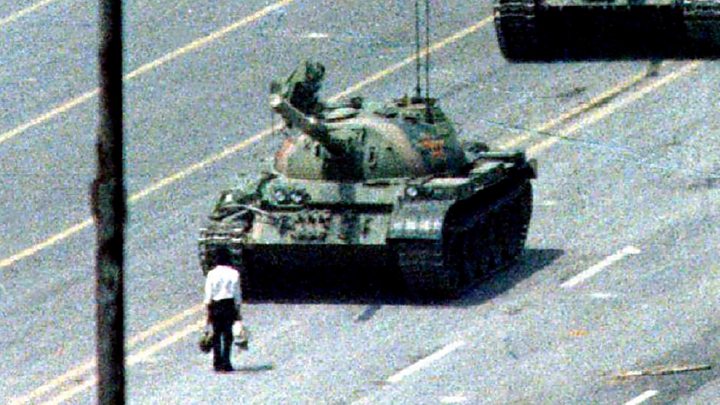
None of this feels as if it's for my benefit, and that's without me thinking that the pandemic effects haven't been modelled on statistically robust data (unless of course Boris is privvy to information we've not been given), so on balance I'm already leading towards contracting Covid-19 and seeing what happens as a preference to eventually standing in front of an army tank because I want to see my daughter and seeing if that really is safer.

Saturday, 22 April 2017

Opportunity Knocking

I’ve just had my first door-knocking of the general election campaign, and have to admit that the activist’s introductory claim to be "getting out and about before people got sick of election/campaigning/etc" did elicit a more favourable response than cold callers normally receive on Saturday mornings.

Anyway, as I live in an area where the sitting Labour MP has a marginal majority and favoured Remain in last year’s referendum, but with a local electorate which voted to Leave, the Liberal Democrats appear to have identified an opportunity to position themselves as the natural opposition to the sitting government on the subject of Brexit, or at least that’s what my visitor was trying to claim anyway.

Admittedly, as just less than half of the national electorate voted Remain in last year’s referendum, it is very plausible that a significant proportion of them could well be attracted by a party proposing a clear and coherent alternative to the government’s plans for leaving the European Union, however, as my doorstep conversation confirmed: the Liberal Democrats don’t actually have one.

It’s not a particularly challenging analytical exercise to conclude that the Labour Party’s policy over Brexit is so convoluted that very few, if any, of their MPs appear to understand what it is. Tim Farron’s representatives (this one at least), on the other hand, are up-front in their desire for a second referendum, but when I asked "on what exactly", our conversation got a little more interesting.

Now I don’t know whether the obfuscation is deliberate party policy, or whether someone has decided that a lack of clarity will help to generate local votes, but it turns out that the second referendum promise is not based on whether Britain should leave the EU: it would be on whatever deal the British government eventually strikes. Or in other words, some sort of decision on whether the UK should take the Brexit terms agreed by the government, or remain in the EU until there’s an arrangement in place that the electorate can accept.

I also don’t know (and neither did the person canvassing for my support) whether Article 50 can actually be revoked now our PM has triggered it, and so can’t say if it’s even possible that any popular rejection of a future deal could involve Britain staying in the EU, but if staying is a possibility, what incentive does the EU have to offer any sort of acceptable deal if it wants to keep the UK?

Theoretically, the Liberal Democrats are well-placed to exploit the chaotic "leadership" of the Labour Party, not least with regards to the desires of Remainers, but they really need to rethink their stance on EU membership...

Wednesday, 9 January 2013

Parrot Fashion Disaster


Education Secretary Michael Gove has announced that teenagers will now be encouraged to learn, by heart, some of the 130 poems in a new anthology for a nationwide competition. Parrot fashion we called it at school. Not an enlightening way for a young mind to learn anything because they end up with as much understanding of Chaucer, Blake, Wordsworth, Keats and Hardy as, well, parrots.

Gove claims that this "policy" is intended to help "pass our cultural legacy on to the next generation", but in reality it'll only mean that our literature education regressing to the days of fold-up desks, ink wells, chalk boards and clips around the ear; but as most of our older generation remain utterly clueless when it comes to Shakespearean language or the works of Shelley, it obviously didn't work back then either. Does he not have any advisors who care (know?) about education enough to tell him that this is an ill-considered substitute for teaching, and that learning poetry, or pretty much any subject worth studying, is more to do with developing an understanding, not memorising by rote?

What next for the self-interested point scorers who want to take us back to some mythical golden age of education? Returning imperial measurements to the classroom alongside metric because that’s the way it was when everybody had rickets?

Oh dear.
Apparently that's already another "policy" with no obvious benefit to future of the nation....